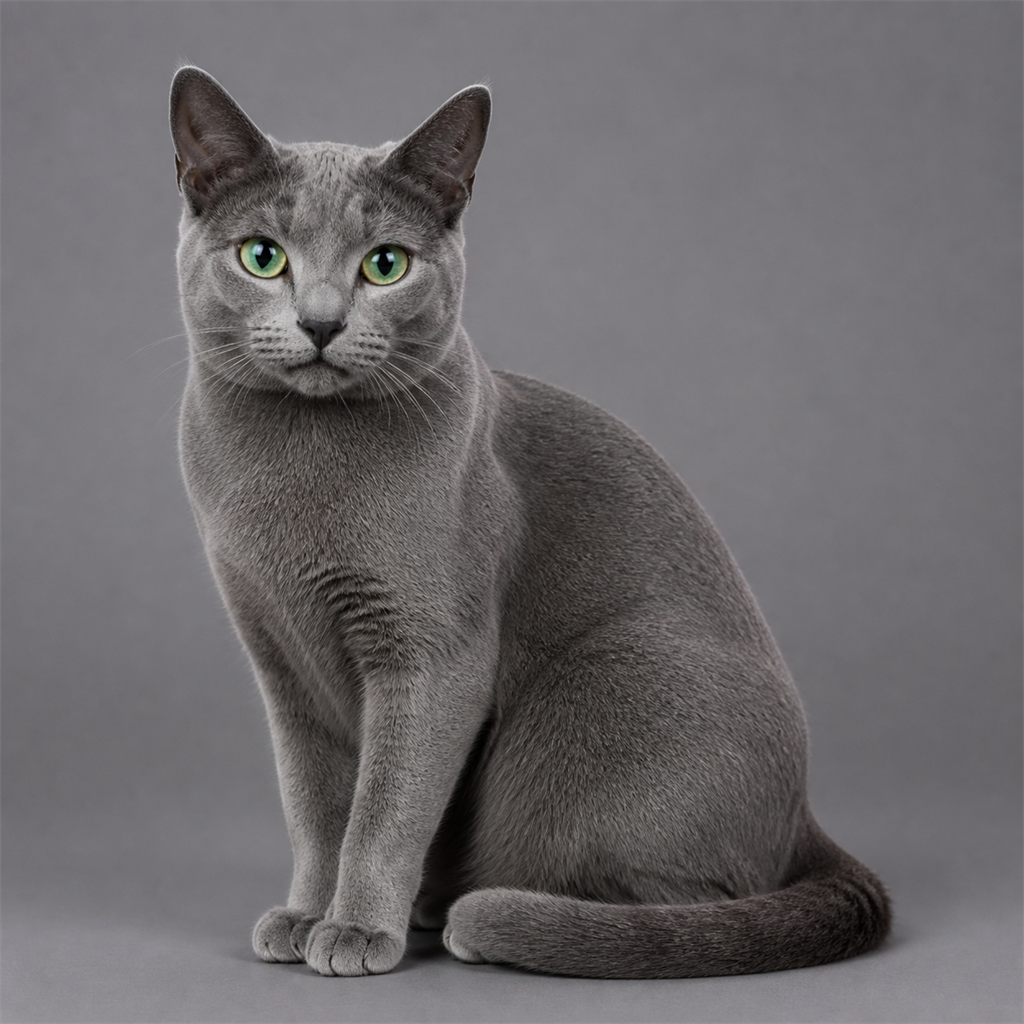
The Russian Blue is a short-coated cat breed from Russia, typically weighing 8–15 lb (3.5–7 kg) and living 12–15 years.
Elegant, plush-coated, and reserved, the Russian Blue bonds deeply with its chosen people while staying shy around strangers. It is quiet, clean, and undemanding, content with calm routine and a little daily play. It produces less of the Fel d1 protein, so many allergy sufferers tolerate it better. Healthy and long-lived, it suits quiet homes that respect a cat's need for space.
01Produces less allergen — often better for allergy sufferers
02Quiet, clean, and low-shedding
03Very healthy with a long lifespan
− Things to consider
03
01Shy and slow to warm to strangers
02Dislikes noise and change in routine
03Reserved — not an in-your-face cuddler
Trait profile
15 dimensions · 0–10 scale
01Size
05/10
02Energy level
05/10
03Affection
06/10
04Vocalness
02/10
05Shedding
02/10
06Grooming needs
03/10
07Friendliness
04/10
08Good with kids
07/10
09Good with other pets
06/10
10Independence
07/10
11Intelligence
07/10
12Health robustness
08/10
13Allergy-friendly
05/10
14Longevity
08/10
15Affordability
04/10
Russian Blue: frequently asked questions
Q01What's good about owning a Russian Blue?
Produces less allergen — often better for allergy sufferers; Quiet, clean, and low-shedding; Very healthy with a long lifespan.
Q02What should I watch out for with a Russian Blue?
Shy and slow to warm to strangers; Dislikes noise and change in routine; Reserved — not an in-your-face cuddler.
Q03Is the Russian Blue good with kids?
Yes. The Russian Blue scores 7/10 for getting along with children and usually takes the noise and handling of family life in stride. Teach children to handle cats gently.
Q04Does the Russian Blue get along with other pets?
It can, with a slow introduction. The Russian Blue scores 6/10 for getting along with other pets, and temperament varies between individual cats.
Q05Is the Russian Blue hypoallergenic?
Partly. The Russian Blue scores 5/10 for allergy-friendliness and 2/10 for shedding. Some people with mild allergies cope, but it is not a safe bet, so spend time with one before committing.
Q06Can a Russian Blue be left alone during the day?
Yes. The Russian Blue scores 7/10 for independence and generally copes well with a normal workday on its own, given toys and a window to watch.
Q07Is the Russian Blue a quiet cat?
Yes. The Russian Blue scores only 2/10 for vocalness, so it tends to communicate quietly.
Q08How big does the Russian Blue get?
An adult Russian Blue typically weighs 8–15 lb (3.5–7 kg).
Q09How long does the Russian Blue live?
The Russian Blue typically lives 12–15 years. Genetics, weight, exercise and regular vet care all affect an individual's lifespan.
Q10Where does the Russian Blue come from?
The Russian Blue was developed in Russia.
Q11Is a Russian Blue the right pet for me?
Elegant, plush-coated, and reserved, the Russian Blue bonds deeply with its chosen people while staying shy around strangers. It is quiet, clean, and undemanding, content with calm routine and a little daily play. It produces less of the Fel d1 protein, so many allergy sufferers tolerate it better. Healthy and long-lived, it suits quiet homes that respect a cat's need for space.
Reverse match
Is the Russian Blue right for you?
8 quick questions. We compare your answers with the Russian Blue's trait profile — nothing is stored or sent anywhere.