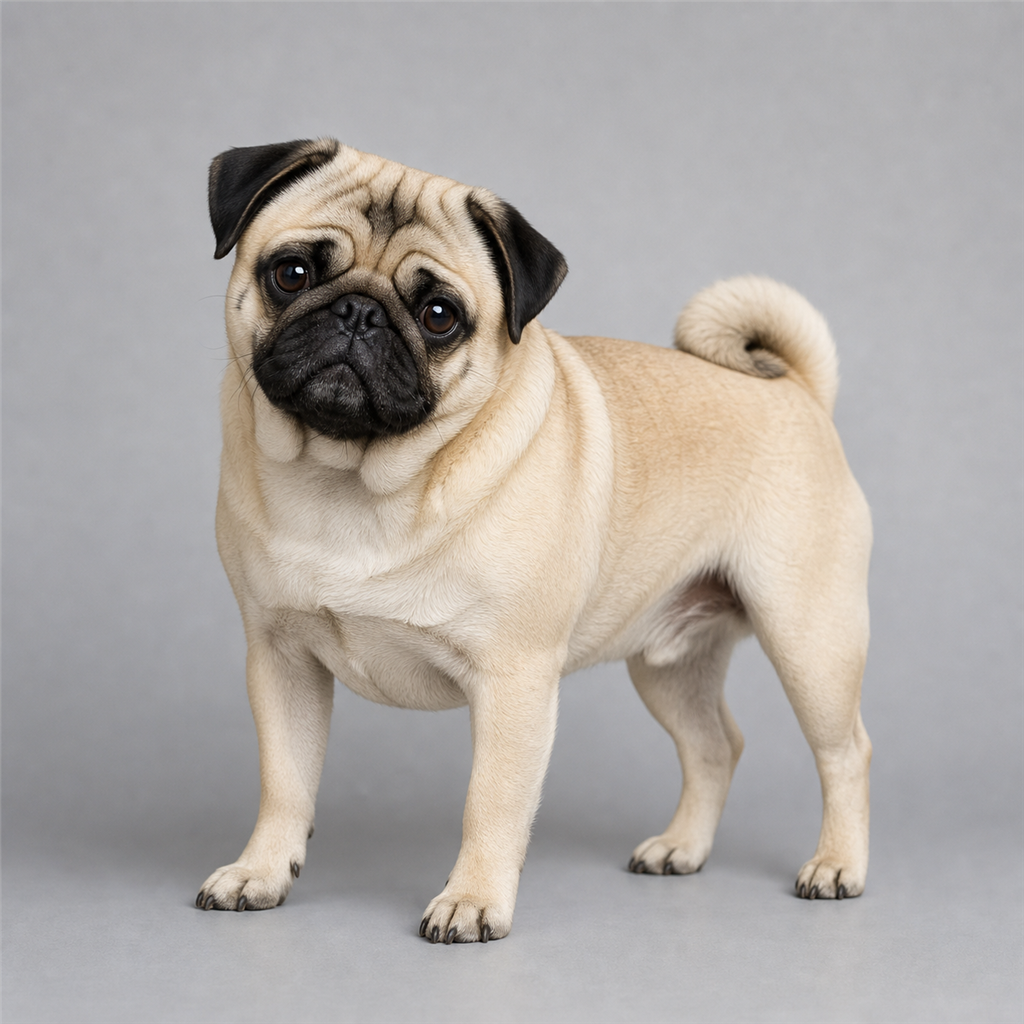
The Pug is a small dog from China in the Toy group, typically weighing 14–18 lb (6.5–8 kg) and living 13–15 years.
Bred over 2,000 years ago in imperial China as lap dogs for emperors, the Pug was brought to Europe in the 16th century by Dutch traders and became William of Orange's signature breed. The motto multum in parvo ('much in little') captures their oversized personality. Affectionate, comical, gentle with children, and content with modest exercise. The honest trade-offs: severe brachycephalic breathing problems, intolerance to heat, eye injury risk, and surprising amounts of shedding.
Affectionate and people-loving; Modest exercise needs; Charming, comical face.
Q02What should I watch out for with a Pug?
Severe brachycephalic breathing issues; Heat sensitivity; Sheds more than you'd expect.
Q03Is the Pug good with kids?
Yes. The Pug scores 8/10 for getting along with children, making it one of the more family-friendly choices. As with any dog, supervise young children and teach them to handle a dog gently.
Q04Can a Pug live in an apartment?
Yes, it adapts well to apartment life. On our 0–10 scales the Pug rates 3 for size, 4 for energy and 3 for barking, a manageable combination as long as it still gets daily walks.
Q05Is the Pug a good dog for first-time owners?
It can be, if you commit to training and daily exercise. The Pug scores 5/10 for trainability and 4/10 for energy, so it rewards owners who put in consistent time.
Q06Is the Pug hypoallergenic?
No. The Pug scores 1/10 for allergy-friendliness and 7/10 for shedding, so it is a poor match if anyone in your home has dog allergies.
Q07Can a Pug be left alone during the day?
For moderate stretches. The Pug scores 4/10 for tolerating time alone; plan a midday walk or a dog walker on long workdays.
Q08How big does the Pug get?
An adult Pug typically weighs 14–18 lb (6.5–8 kg) and stands 10–13 in (25–33 cm) tall at the shoulder.
Q09How long does the Pug live?
The Pug typically lives 13–15 years. Genetics, weight, exercise and regular vet care all affect an individual's lifespan.
Q10Where does the Pug come from?
The Pug was developed in China.
Q11Is a Pug the right pet for me?
Bred over 2,000 years ago in imperial China as lap dogs for emperors, the Pug was brought to Europe in the 16th century by Dutch traders and became William of Orange's signature breed. The motto multum in parvo ('much in little') captures their oversized personality. Affectionate, comical, gentle with children, and content with modest exercise. The honest trade-offs: severe brachycephalic breathing problems, intolerance to heat, eye injury risk, and surprising amounts of shedding.
Reverse match
Is the Pug right for you?
8 quick questions. We compare your answers with the Pug's trait profile — nothing is stored or sent anywhere.